
I come out and test the slab myself
When you call, I set up a time to come out, look at your floor and test the slab in person. I'm checking for cracks, moisture and how far out of level it runs, because that's what tells me which product fits.
Floor dips, rough patches or worn outdoor concrete? We test the slab, then lay a smooth, sound surface that's ready for what comes next.
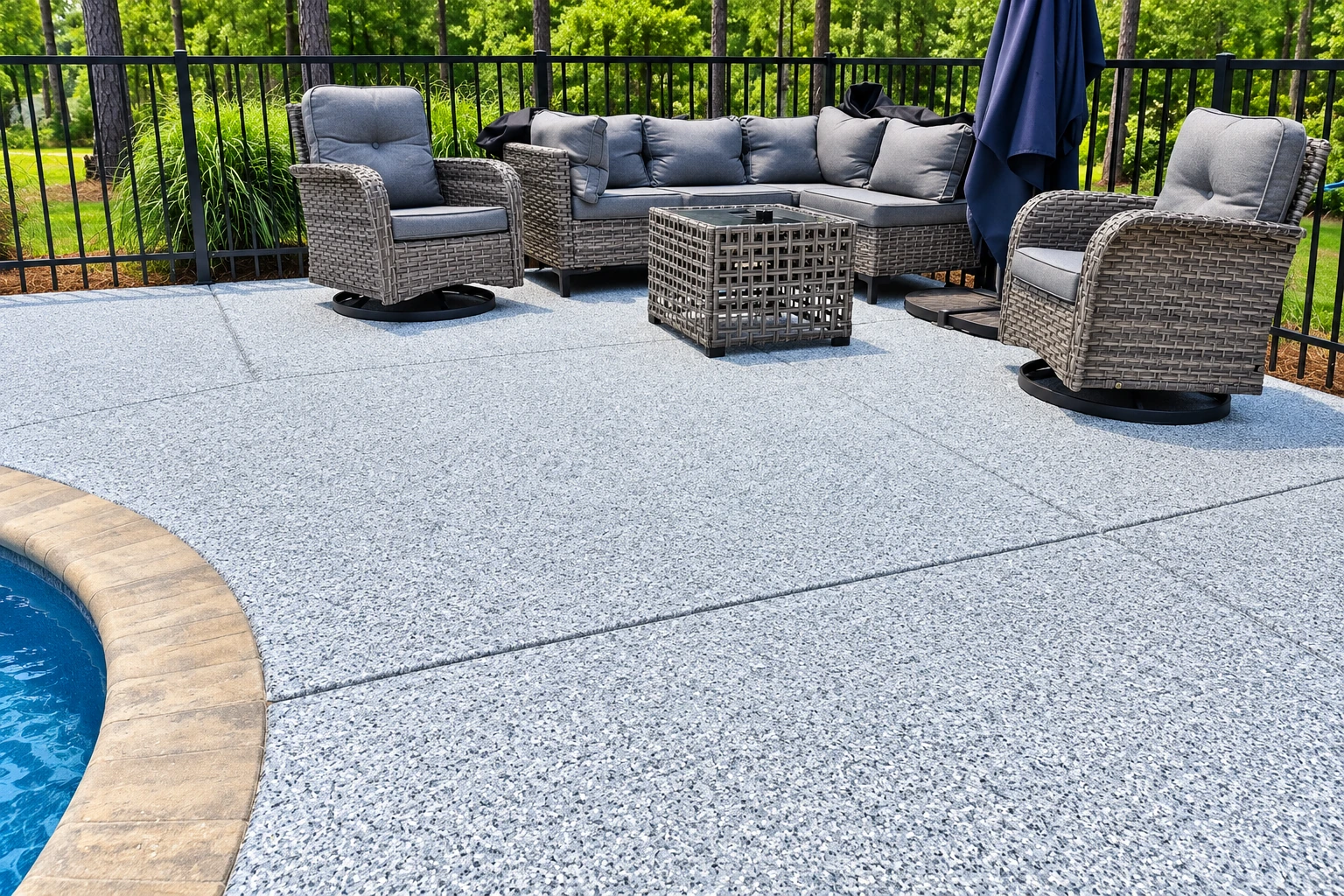
Self-leveling concrete and overlays in Country Walk, FL both put a new cement-based layer over your existing concrete. A self-leveler gives an indoor floor a smooth, flat base before new flooring goes in, and an overlay resurfaces sound concrete that's worn, stained or out of level, inside or out.
Most calls start with something you can see or feel. New tile or plank won't lie flat over a dip, there's a ridge where two pours meet, or a patio or walkway has gone rough and blotchy. Inside the house that usually points to a self-leveler, and outside it points to an overlay, but the slab underneath decides whether either one is the right call yet.
The price moves with the size of the area, how far out of level it runs, how much crack repair or old flooring removal comes first, and whether the slab needs a moisture barrier before anything else goes down. The schedule turns on those same things, mostly the moisture test and how long each layer has to cure, so your own number comes from the written estimate I give you after I test the slab.
I started as a helper on a coatings crew, mixing material and pushing a grinder, and we've been in business since 2017. Here's how it goes from your first call.
When you call, I set up a time to come out, look at your floor and test the slab in person. I'm checking for cracks, moisture and how far out of level it runs, because that's what tells me which product fits.
You get a written estimate that lays out the prep, the product and any extra step the slab needs, like a moisture barrier. If the slab isn't ready for a topping yet, I'll tell you that plainly rather than pour over it and hope.
Before we schedule, we check which office covers your address, and if the job needs a permit or other approval, we handle the application and tell you what you need to sign. We're fully licensed and insured, our crew does the work with me on the job, and we walk the finished floor with you. Your satisfaction, guaranteed.
We match the product to where it's going, since a self-leveler is for floors inside and an overlay can handle outdoor concrete. Once the slab checks out, we prep the surface, put down the layer the floor needs and let it cure before your new flooring or finish goes on.
Some jobs need other work first. If old tile, carpet or glue has to come up, that's our concrete floor stripping and removal work, and if the worn concrete is around your pool, our pool deck coatings and resurfacing is usually the better fit for that deck.
Each step is here because skipping it is what usually shows up later as a crack or a floor that won't stay put.
We look at every crack and joint first, because one maker warns that moving joints or cracks can carry up through a self-leveling layer and crack the flooring on top. Overlays are made for concrete that isn't moving, so a slab that's still shifting gets sorted out first, or I tell you it isn't ready.
One maker states that its self-leveler isn't a vapor barrier, so we test the slab for moisture before it goes down. If the readings run too high for any part of the flooring system, a moisture barrier coating goes on first, which adds a step to the job.
We clean and open up the surface so the new layer can grab, then pour the self-leveler or spread the overlay to the height the floor needs. On an overlay, this is when any stamping or roller texture goes in.
One maker's guide has doors and windows closed, the HVAC off and the area out of direct sunlight until the underlayment cures. The same guide keeps the slab and room between 50°F and 95°F before the pour and for at least 72 hours after, so it's worth planning the job for days you can hold that range indoors.
Call (786) 733-0104 or send the form with the floor's size, whether it's indoors or out, the flooring you're planning and any cracks or old glue you've noticed. We reply within one business day to set up a time, and I come out to test the slab and give you a free written estimate on site, with no obligation.
(786) 733-0104Usually not, because one maker's guide says its self-leveling underlayments are for interior floors only. Overlays are made for floors and outdoor paved surfaces, and one maker's cured overlay holds up to foot and car traffic, so an overlay is what we put on a driveway, patio or walkway.
Across the US, leveling a concrete floor with self-leveling compound usually runs about $4.50 to $7 per square foot installed. That's a national range, not our price, so your own figure comes from the estimate after I've tested your slab.
One maker's data sheet lists its self-leveler as walkable in 1 to 2 hours and ready for floor covering in 6 to 12 hours. Those are that product's figures, so we tell you when your floor is ready for the next layer.
It can be hazardous, because old adhesive residue removed by mechanical means may contain asbestos. One maker advises checking with the adhesive maker and the proper government agencies on safe removal before work begins, so if we find old glue, we sort out safe removal before any scraping starts.
We're based in Country Walk and work across the cities around it in Miami-Dade County, so the county's rules are the ones most of our jobs run under. The county licenses the contractors and tradesmen who work here through its Contractor Licensing Section, and a county board sets which kinds of work each license covers.
For smaller home jobs, the county's Permitting and Inspection Center takes exemption requests for home improvement work valued under $7,500, and the value in your contract is the number that counts. The owner or contractor sends a written request with that contract showing the work and its value. It covers single-family homes, duplexes and townhouses, but not units in multi-family buildings or properties partly or entirely in a flood hazard area, and a project can't be split into smaller phases to get under the line. We look at all of that in the permit check before we schedule.
Knowing early whether your slab needs crack repair or a moisture barrier lets you set a realistic date for your new flooring, so call (786) 733-0104 or send the form.
If you're not sure yet whether your floor needs a leveler or an overlay, tell us what you're seeing and we'll talk it through.
Tell us about your project