
I come out and test the slab myself
When you call, I set up a time to come out, look at what's on your floor and test the slab myself. I've run this business since 2017, and I learned the trade pushing a grinder on a coatings crew.
Peeling sealer, flaking paint or old vinyl stuck to your slab? We take it down to clean concrete that's ready for the next finish.
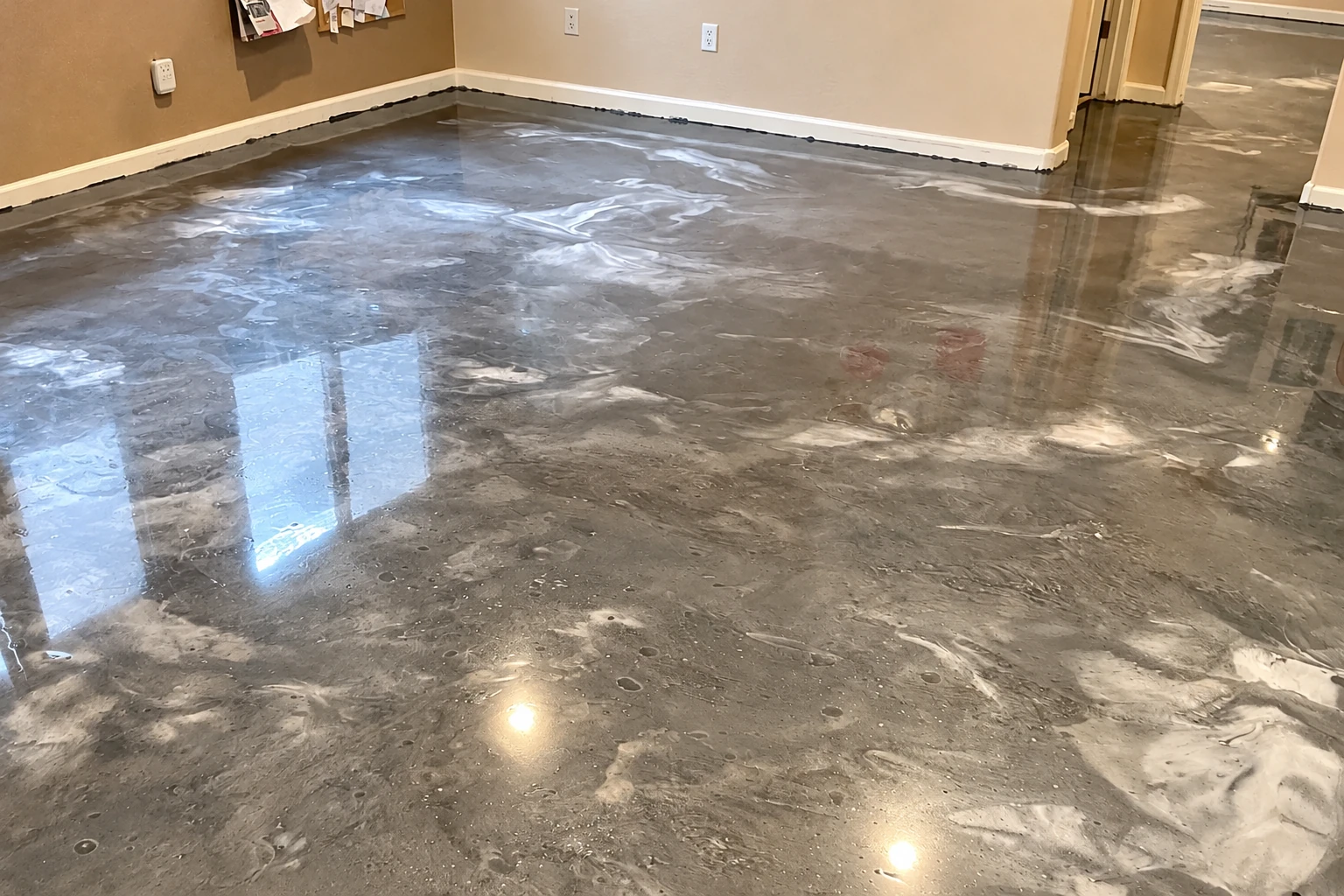
Concrete floor stripping and removal in Country Walk, FL takes old sealer, paint, coatings or old flooring off your slab, with a chemical stripper or by grinding, so you're left with bare concrete that's ready for its next finish.
At Country Walk Cobalt Epoxy Flooring, most of these calls start the same way. An old sealer is peeling, a painted garage floor is flaking, or there's tired tile or sheet flooring over the slab and you want something new down. I'd rather take the old layer off properly than lay a new coating over one that's already letting go, because what's underneath decides how the next floor holds up.
The price mostly comes down to how big the floor is, what's on it, how thick it is and how many layers there are, whether old flooring needs an asbestos test first, and what finish is going down next. The schedule turns on the same things, since a stripper on a heavy coating needs time to work and nobody scrapes old flooring until we know what's in it. Your own figure comes on the written estimate after I've seen the floor.
Here's who you'll deal with and what you get before any work starts.
When you call, I set up a time to come out, look at what's on your floor and test the slab myself. I've run this business since 2017, and I learned the trade pushing a grinder on a coatings crew.
You get a written estimate that says whether I'd use a stripper or a grinder on your floor and why. If old flooring needs testing before it comes up, I'll tell you that at the same visit.
We're fully licensed and insured. Our crew preps and strips the slab, I'm on the job with them, and when it's done I walk the floor with you.
I choose between a chemical stripper and grinding based on what's going on the floor next, because the bare concrete has to suit that finish and the two methods leave it in different shape. If there's old sheet or tile flooring on the slab, or old glue under it that might hold asbestos, we have it tested before anyone sands or scrapes. Once we know what we're dealing with, we take the coating or flooring off, clear away the residue and leave you clean, bare concrete.
Stripping is usually the first half of a bigger job. In garages, on patios and inside homes, the bare slab is often headed for one of our epoxy floor coatings. When it's a shop, warehouse or other business floor, we follow the stripping with commercial and industrial epoxy floor coatings so the space can go back to work on a fresh surface.
The steps are simple. The care goes into doing them in the right order.
We move what can be moved and cover what stays, because stripper splatter and dust travel further than most people expect.
Solvent strippers need good airflow and some of them are highly flammable, so we open doors and windows and keep fans running the whole time they're down.
With a stripper, we give it the time it needs to soften the coating before we scrape it up, since rushing it just leaves patches behind. When grinding is the method we picked, we run the grinder until the old layer is gone.
We clear the residue and look the bare concrete over before we call it done. If you're planning the next coating yourself, ask what surface its maker wants, because the slab has to suit it.
Tell us roughly how big the floor is, what's on it now and what finish you want next. We reply within one business day to set a time, then I come out, test the slab and give you a free written quote on site. There's no obligation to go ahead.
(786) 733-0104If you want a see-through decorative finish afterward, a chemical stripper is usually the better choice, because grinding, blasting or sanding often roughs up the surface so those finishes can't go on. Both methods work, but mechanical removal is loud and dusty, and the rougher kinds like scarifying or milling can leave fine cracks that mean more prep later. Chemical stripping is the most common way it's done, and I'll tell you which way I'd go once I've seen your floor.
It could, and the flooring industry says to assume old resilient flooring, the sheet and tile kind, and its glue do contain asbestos unless you know for certain they don't. Their dust is a cancer and breathing hazard, so the test comes before any sanding or scraping, and regulations may require it anyway. If there's only one old layer, the industry would rather a new floor go over it than tear it out, since that leaves the material in place and undisturbed.
It mostly depends on how thick the old coating is, since thicker coatings take more stripper and more time, and one industry guide reports a thick epoxy taking 12 to 24 hours to strip. Biochemical strippers are the gentlest type but have to sit on the surface for long periods. I'll tell you what to expect for your floor after I've looked at it.
Miami-Dade County's list of work that needs no building permit doesn't settle it, so it's worth checking with the county for your address. That list covers surfacing floors with carpet, tile, brick, wood or Chattahoochee, and floor stripping isn't on it. We check which office covers your address before we schedule, and if your job needs a permit or other approval, we handle the application and tell you what you need to sign.
We're based in Country Walk, FL and work across the cities around it in Miami-Dade County, including Kendall, The Hammocks and Richmond West. Around here we strip a lot of tired garage coatings, sealed patios and old tile or sheet flooring in homes, along with shop and warehouse floors that need redoing.
Old flooring in a business can bring the county into it. Miami-Dade's Department of Regulatory and Economic Resources has to review and approve most renovation projects at commercial and certain residential facilities for asbestos, and its examples include residential buildings with 5 or more units. The county also requires an asbestos survey for renovations that disturb more than 160 square feet of suspect material, so on a big floor in one of those buildings, that survey comes before the old flooring does.
If you're about to pull up old tile or vinyl yourself, call (786) 733-0104 first so we can talk about testing before any dust gets stirred up.
If you're not sure what's on your slab or how it should come off, call (786) 733-0104 and we'll talk it through.
Tell us about your project